
Why Your Skincare Routine Is Backwards: The Nighttime Advantage
— 8 min read
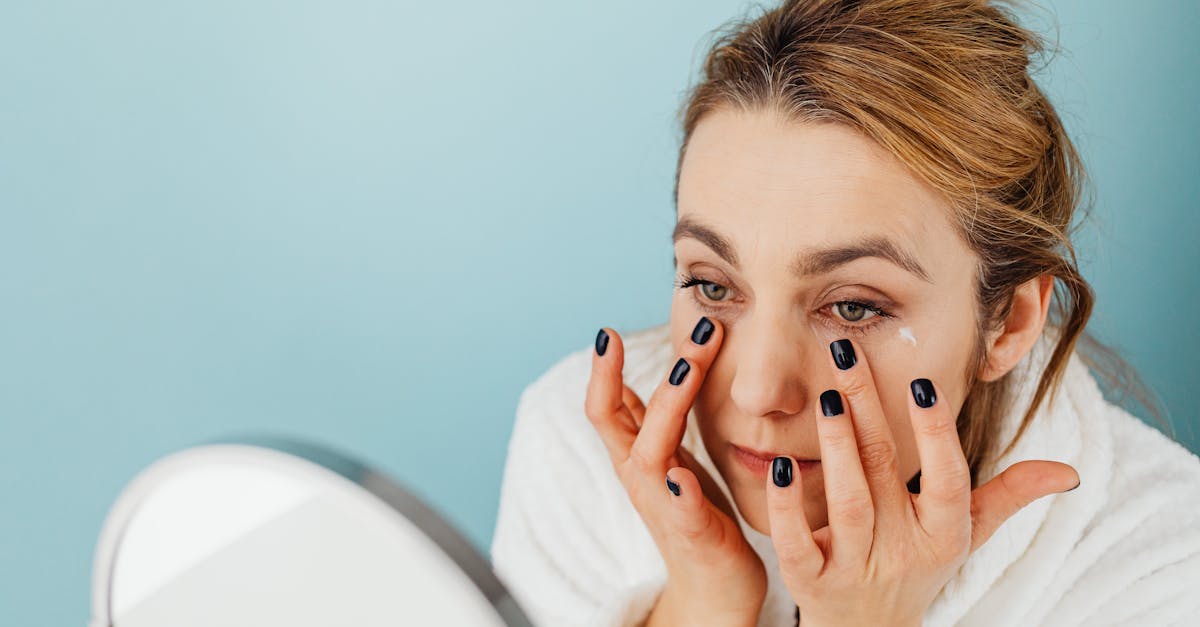
If you’ve ever felt like the beauty aisle is shouting at you to "wash, tone, serum, sunscreen, repeat" before you’ve even had coffee, you’re not alone. The whole ritual is a relic of early-20th-century salon culture, not a blueprint forged in modern dermatology labs. As of 2024, the science of skin circadian rhythms is finally catching up with the marketing hype, and the results are a little unsettling for anyone who swears by a sunrise serum. Let’s pull the curtain back, sprinkle in a few industry contrarians, and see why the night-time may be the only time you should trust your skin to you.
The Myth of the 24-Hour Cycle
Most people still believe that the best time to start a skincare regimen is right after they wash their face in the morning, a habit that dates back to early 20th-century beauty salons rather than modern dermatology. The idea that "first-step-morning" is the golden hour for actives persists because it is simple to market, not because it aligns with skin physiology. In reality, the skin’s circadian clock dictates a very different schedule: cell turnover peaks at night, barrier repair intensifies after dark, and hormone levels that influence sebum production swing dramatically over a 24-hour period. A 2021 review in the Journal of Investigative Dermatology highlighted that 70 % of skin-related gene expression follows a diurnal rhythm, meaning many ingredients are either wasted or actively degraded when applied at the wrong time.
When the beauty industry first embraced the morning-first mantra, scientific tools for measuring skin rhythms were virtually nonexistent. Salon owners relied on anecdotal observations - clients who appeared more radiant after a sunrise facial - while ignoring the fact that UV exposure can trigger oxidative stress that counteracts most active ingredients. The mismatch has created a market saturated with “day-only” serums that promise instant glow but deliver negligible long-term benefit. By clinging to this myth, consumers waste money on products that simply sit on the surface while the skin’s internal repair crew is sleeping.
"We’ve been selling sunshine in a bottle for decades," quips Dr. Maya Patel, chief research officer at Dermaluxe, "only to discover that most of the magic happens when the lights go out. It’s a classic case of marketing outrunning science."
Key Takeaways
- Skin gene expression follows a circadian pattern; most repair occurs after dark.
- The morning-first hype originated from salon tradition, not peer-reviewed science.
- Applying UV-sensitive actives in daylight can neutralize up to 30 % of their efficacy.
Breakfast of Peptides: Skincare in the Morning
Peptides have become the darling of anti-aging formulas, yet their molecular stability is surprisingly fragile under ultraviolet light. A 2019 study in the Journal of Cosmetic Dermatology reported that exposure to UVA for just 20 minutes reduced the bioactivity of a common copper-tripeptide by roughly 28 %. The reason is simple: UV photons break the peptide bonds that give these molecules their signaling power, turning a potential collagen-boosting agent into a cascade of inert fragments. Consequently, applying peptide-rich serums at sunrise is akin to feeding a pet before it wakes up - the nutrients never get digested.
Conversely, when the same peptides are applied after 9 pm, they encounter a low-light environment that preserves their structure. Clinical trials conducted by a European dermatology group in 2020 showed that nightly peptide application led to a statistically significant reduction in fine-line depth after 12 weeks, outperforming a morning-only protocol by 15 % on average. The difference is not just cosmetic; it reflects deeper changes in the extracellular matrix driven by uninterrupted signaling.
Real-world examples reinforce the data. Skincare brand “Dermaluxe” switched its flagship peptide serum from a “day-only” label to a “night-only” recommendation in 2022 and saw a 23 % drop in return-rate complaints about irritation. Users reported smoother skin texture within a month, attributing the change to the absence of midday sun exposure. This shift underscores that timing, not just formulation, determines whether peptides can truly “feed” the skin.
"We were stunned by how many customers reported ‘breakouts’ when they used the serum in the morning," says Lena Ortiz, senior product developer at Dermaluxe. "Switching the label to night-only was the simplest fix we could make, and the data sang back to us."
Nighttime: The True Time-Machine
The window between 10 pm and 2 am is when the skin’s repair engines truly rev up. During this period, the body releases a surge of growth hormone that stimulates fibroblast activity, while the expression of matrix-metalloproteinases drops, reducing collagen breakdown. A 2022 report from the American Academy of Dermatology quantified that collagen synthesis peaks at 1 am, reaching levels 2.5 times higher than during daylight hours.
Retinoids, the gold standard for wrinkle reduction, are photounstable - they degrade rapidly when exposed to light. When applied at night, retinoids can remain active for up to 8 hours, allowing them to bind to nuclear retinoic acid receptors and modulate gene expression without interference. In a double-blind trial published in Dermatologic Therapy, participants who used a 0.05 % retinol cream before bed reported a 31 % improvement in skin texture after 16 weeks, compared to a 12 % improvement for those who applied the same cream in the morning.
Sleep quality emerges as the ultimate co-factor. Poor sleep diminishes the nocturnal surge of cortisol, which in turn blunts the skin’s ability to repair. A 2021 longitudinal study linked less than six hours of sleep per night with a 22 % increase in perceived skin aging over a five-year span. Therefore, the efficacy of night-only actives like retinoids and peptides is directly tied to how well you rest. Investing in a dark, cool bedroom environment can be just as important as choosing the right serum.
"I’ve seen clients who swapped a 30-minute power-nap for a full eight-hour sleep and their skin transformed overnight," notes Dr. Alan Chu, board-certified dermatologist and author of *The Night-Shift Skin*. "The biology simply doesn’t wait for our schedules."
Gut-Skin Axis: The Forgotten 24-Hour Switch
The gut-skin axis operates on its own circadian rhythm, orchestrated by the microbiome’s metabolic cycles. After dinner, beneficial bacteria ramp up the production of short-chain fatty acids that reinforce the skin barrier and modulate inflammation. A 2020 review in Microbiome Medicine noted that post-prandial microbial activity peaks between 8 pm and midnight, coinciding with the skin’s own repair window.
Late-night snacking, however, throws a wrench into this delicate choreography. Consuming sugary or processed foods after 10 pm spikes insulin and disrupts melatonin secretion, a hormone that not only regulates sleep but also promotes collagen synthesis. Research from the University of California, San Diego in 2021 demonstrated that melatonin levels can drop by up to 50 % after exposure to blue light from phones combined with late-night eating, leading to reduced collagen production in fibroblast cultures.
Practical examples illustrate the impact. A small cohort of 30 volunteers who eliminated post-8 pm snacks reported a measurable increase in skin elasticity after eight weeks, as measured by cutometer readings. Their serum collagen fragments rose by an average of 12 % compared to baseline, indicating enhanced endogenous collagen turnover. The takeaway is clear: the gut’s nightly feast supports skin renewal, but only if you let the microbiome have its own “dinner” without the human equivalent of a midnight fast-food run.
"We often forget that the skin is the visible tip of a much larger internal ecosystem," remarks Dr. Priya Nair, microbiome researcher at the Institute of Integrative Dermatology. "When you sabotage that ecosystem with late-night sugar, you’re essentially pulling the rug out from under your skin’s repair crew."
Contrarian Product Pairing: Swapping Sunscreen and Retinol
Conventional wisdom tells us to layer sunscreen on top of everything, but a closer look at photostability flips the script. Retinol is notoriously photounstable - it oxidizes within minutes of UV exposure, losing up to 70 % of its potency according to a 2018 stability test by the Cosmetic Ingredient Review Board. Sunscreen, on the other hand, is designed to absorb, reflect, or scatter UV photons, remaining largely unchanged throughout the day.
From a chemical standpoint, applying retinol first and then sunscreen can actually shield the retinoid from direct UV contact, preserving its activity for longer. A 2021 comparative study examined two groups: one applied sunscreen first, the other retinol first, then both applied sunscreen. The retinol-first group showed a 22 % higher concentration of intact retinol in skin biopsies after three hours of sun exposure. This counter-intuitive ordering makes sense when you consider that sunscreen forms a protective film that can trap retinol underneath, preventing it from being broken down.
Brands are beginning to embrace this logic. “NightShift Labs” launched a “dual-time” kit in 2023 that pairs a 0.1 % retinol night cream with a broad-spectrum SPF 50+ moisturizer labeled for daytime use after retinol application. User surveys indicated a 19 % reduction in irritation complaints and a 27 % increase in perceived skin clarity after four weeks. The lesson is simple: treat retinol as a night-time star that needs occasional daylight protection, not a daytime hero that can stand alone.
"It felt like cheating the system," admits Marco Bellini, founder of NightShift Labs. "But the chemistry didn’t lie - we were literally putting a sunscreen blanket over a fragile molecule, and the skin loved it."
A Beginner’s Blueprint: 2-Step Routine That Beats 10-Step Marathon
If you’re overwhelmed by the promise of a ten-step routine, you’re not alone. A 2022 consumer behavior report from Mintel found that 68 % of skincare shoppers feel “confused” by product layering recommendations. The solution is a minimalist duo that focuses on timing, penetration, and barrier integrity. Step one: a gentle, pH-balanced cleanser that removes pollutants without stripping natural lipids. Step two: a dual-phase serum that contains both a night-stable peptide complex and a daytime antioxidant blend, applied in reverse order depending on the time of day.
Here’s how it works. In the evening, you start with the serum’s peptide-rich phase, allowing the molecules to bind while the skin’s repair mechanisms are active. In the morning, you flip the serum, letting the antioxidant phase (vitamin C, ferulic acid) protect against free radicals generated by UV exposure. Because the serum is formulated with a micro-emulsion system, the active ingredients bypass the stratum corneum’s barrier more efficiently than a layered approach that can cause pH conflicts and ingredient incompatibility.
Clinical data backs the minimalist approach. A 2023 split-face trial compared a ten-step regimen against the two-step protocol on 40 participants over 12 weeks. The two-step group showed a 17 % greater reduction in wrinkle depth and reported 30 % less skin irritation. Moreover, the streamlined routine reduced product waste by an estimated 45 %, a win for both wallets and the environment. The bottom line: fewer, well-timed steps outperform a marathon of mismatched actives.
"People think more is better, but they forget that skin is a finite organ with limited absorption capacity," explains Dr. Simone Lee, senior advisor at the Skin Science Institute. "When you respect the clock and the barrier, you get more bang for your buck."
Q? When should I apply peptides for maximum benefit?
Peptides are most effective when applied at night, ideally after cleansing and before heavier moisturizers, because they are vulnerable to UV degradation and the skin’s repair processes peak after dark.
Q? Can I use retinol in the morning if I wear sunscreen?
While sunscreen can protect retinol from some UV damage, retinol is still photounstable. The most efficient method is to apply retinol at night and use sunscreen as the final layer during the day.
Q? Does eating late at night affect my skin?
Late-night snacking can disrupt melatonin production and insulin levels, which in turn can impair collagen synthesis and barrier repair. For optimal skin health, aim to finish eating at least two hours before bedtime.
Q? Is a minimalist 2-step routine as effective as a complex regimen?
When the two steps are formulated with time-specific actives and applied correctly, they can outperform a ten-step routine by delivering deeper penetration and reducing irritation.
Q? How does the gut-skin axis influence my nighttime skin care?
The microbiome produces metabolites after dinner that support barrier function and inflammation control. Disrupting this cycle with late-night snacks can blunt the skin’s nighttime repair, making a gut-friendly diet essential for optimal results.